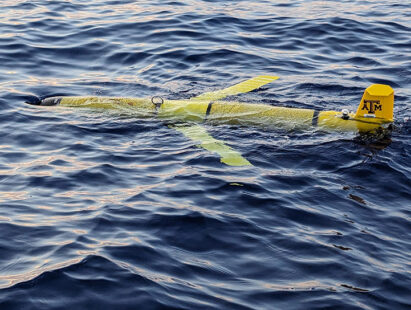
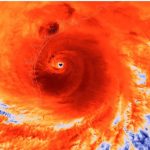
Gliders Integrated into 2026 National Hurricane Operations Plan Forecasting relies heavily on atmospheric data, but what’s happening beneath the ocean surface is just as critical [...]
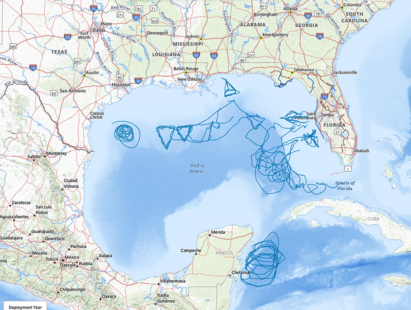
Autonomous Technology Revolutionizes Ocean Observing The Gulf of America AUV Network, Data Archive and Layer Fusing piloting portal — known as GANDALF — has completed [...]
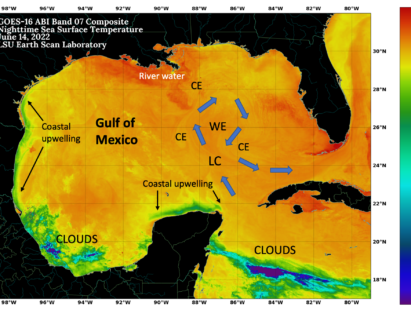
Why do some hurricanes go through rapid intensification? The first named hurricane of the 2025 season was Hurricane Erin, which cranked up intensity from a [...]
“Hurricanes, NWS and GCOOS” *recorded June 25, 2024 GCOOS and the National Weather Service (NWS) joined forces to talk about the 2024 hurricane season outlook [...]
GCAN is pleased to present Tacey Hicks, Texas A&M University (TAMU) doctoral candidate, for the webinar “Tropical cyclone-induced coastal acidification in Galveston Bay, Texas.” Hicks [...]
Uncrewed Systems Play Key Role in Hurricane Intensity Forecasting GCOOS and its partners are launching and tracking autonomous vehicles in the Gulf, Atlantic and Caribbean [...]
Each year, underwater glider pilots in the Gulf of Mexico work together to deploy gliders to gather information needed to inform meteorological models and storm [...]
Robots are revolutionizing hurricane predictions and a new paper details improvements in storm intensity forecasting thanks to these uncrewed ocean observing platforms A new paper [...]