

GCOOS Fall Members’ Meeting highlights new five-year award, advances in ocean observing and strategic planning discussions
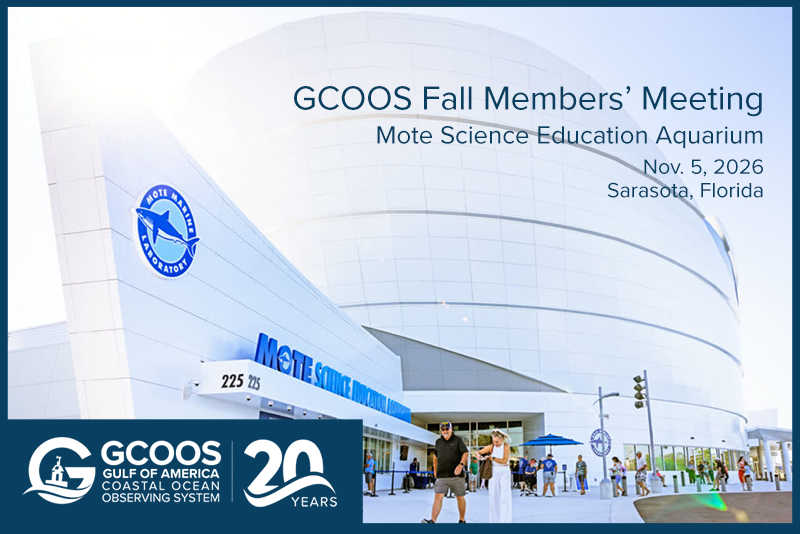
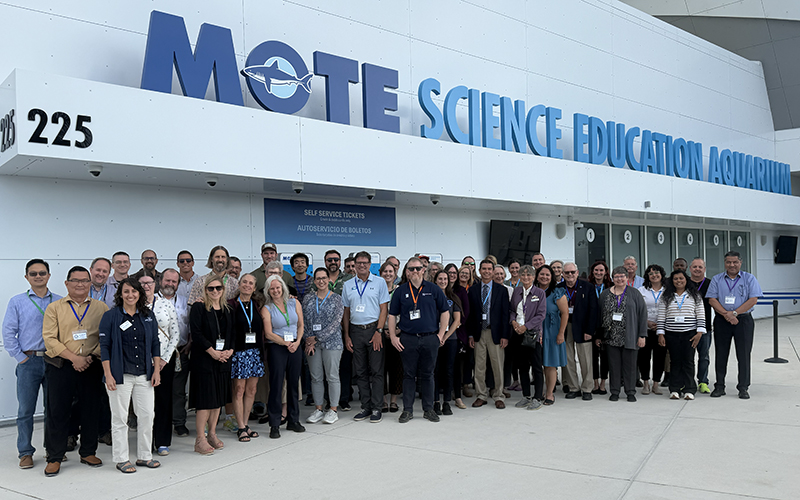
Members and partners of the Gulf of America Coastal Ocean Observing System (GCOOS) gathered Nov. 5 at Mote Marine Laboratory’s new Mote Science Education Aquarium (Mote SEA) in Sarasota, Florida, to review advances in ocean observing, share emerging research and data needs, and help shape the organization’s next strategic plan.
The meeting also marked a leadership transition, with outgoing Board Chair Dr. Kim Yates passing leadership responsibilities to incoming Chair Dr. Jim Kendall and recognizing retiring Board members and GCOOS staff for their service. Newly elected board members were also introduced during the meeting — Dr. Chrissy Wiederwohl, Texas A&M University; Courtney Bouchard, NOAA-NCEI; Dr. Mike Yang, Chevron — and outgoing members were also recognized for their many years of service to GCOOS: Dr. Sara Graves, University of Alabama, Huntsville; Kirsten Larsen, NOAA-NCEI; and Dave Driver (BP ret.). (Click here for the full GCOOS Board of Directors.)
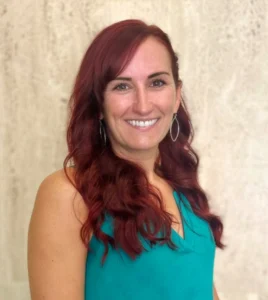
Dr. Chrissy Wiederwohl, Texas A&M University
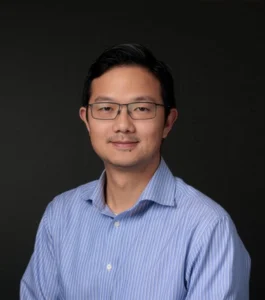
Dr. Mike Yang, Chevron
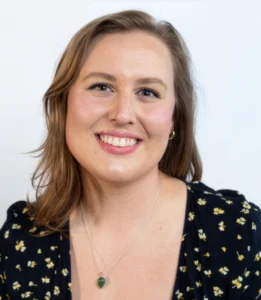
Courtney Bouchard, NOAA-NCEI
Expanding Ocean Observations and Data Resources
GCOOS Executive Director Dr. Jorge Brenner highlighted recent accomplishments and projects supported through the organization’s new five-year award from the U.S. Integrated Ocean Observing System (IOOS). The award includes nine continuing principal investigators and five new investigators.
Recent advances include the addition of data from Spotter buoys, underwater gliders and emerging observing technologies, including Saildrone and C-Star platforms. New multidecadal datasets documenting benthic species at Flower Garden Banks National Marine Sanctuary are also available through the Southeast Marine Biodiversity Observation Network.
Other highlights included:
- Sea turtle research: The Sea Turtle Atlas is expanding its coverage in the southern Gulf with approximately 150 additional satellite tracks.
- Marine heatwave monitoring: GCOOS marine heatwave data are being incorporated into Gulf Coast Watch products to improve understanding of changing ocean temperatures.
- High-frequency radar: A recent workshop provided 15 participants with training in the installation and operation of high-frequency radar stations that measure surface ocean currents.
- Regional modeling: GCOOS Mississippi-Alabama Sea Grant Physical Oceanography Inventory Coordinator Hafeez Odalejo is working with Board member Pat Hogan to develop an inventory of regional modeling resources.
Representatives from the national IOOS Program Office and IOOS Association also provided updates on federal observing priorities, including modernization of ocean modeling products, improvements in high-frequency radar data management and expanded marine biodiversity data coordination. Discussions emphasized the importance of continued regional collaboration and sustained support for the national ocean observing network.
Connecting Ocean Observations to Real-World Needs
A series of three expert panels explored how ocean observing information supports healthy ecosystems, public health and community resilience. The discussions were designed to identify emerging needs and opportunities for collaboration that will help guide the next generation of the GCOOS Strategic Plan.
Observations Supporting Healthy Ecosystems, moderated by Dr. Pat Hogan, featured Dr. Beth Stauffer of the University of Louisiana at Lafayette, Dr. Eric Milbrandt of the Sanibel-Captiva Conservation Foundation, Dr. Emily Hall of Mote Marine Laboratory and Dr. Sue Lowerre-Barbieri of the University of Florida.
Panelists discussed the importance of sustained environmental monitoring, including high-frequency nutrient measurements, water quality observations and aquatic animal tracking.
Examples included the use of coastal water quality data to understand the effects of Lake Okeechobee freshwater discharges on Southwest Florida estuaries and the growing Integrated Tracking of Aquatic Animals in the Gulf of America (iTAG) network, which includes approximately 200 members and has shared more than 13 million animal detections. Milbrandt emphasized the value of the partnerships fostered through GCOOS. “Connecting to people through GCOOS is invaluable — I have collaborations with many people in this room,” he said.
Observations Supporting Public Health, moderated by Dr. Emily Hall, featured Dr. Darren Henrichs of Texas A&M University, Dr. Antonietta Quigg of Texas A&M University at Galveston and Dr. Michael Wetz of the Harte Research Institute at Texas A&M University-Corpus Christi.
Their presentations focused on the expanding use of Imaging FlowCytobots (IFCBs), automated instruments that identify and monitor phytoplankton, including species associated with harmful algal blooms. The observations support early warnings, public health decisions and research into how changing environmental conditions influence bloom development. Panelists also identified opportunities to improve short-term bloom forecasts, expand real-time data access and use artificial intelligence to accelerate phytoplankton identification.
Observations Supporting Community Resilience, moderated by Dr. Chrissy Wiederwohl, featured Dr. Brian Dzwonkowski of the University of South Alabama and Dauphin Island Sea Lab, Dr. Catherine Hancock of Florida State University and Jason Rider of the Mississippi Department of Marine Resources.
The panel highlighted the practical value of real-time ocean and coastal observations for weather forecasting, emergency response, aquaculture and coastal resource management.
Examples included Alabama’s real-time coastal observing network, which supports marine weather forecasts and public safety; Florida Panhandle monitoring programs that provide information for oyster restoration and coastal management; and a developing water quality monitoring network across Mississippi, Louisiana and Alabama that will support oyster harvest decisions, reef restoration and seafood safety.
Across all three panels, participants emphasized the need for sustained monitoring, improved data integration, more accessible information products and closer collaboration between scientists and the people who rely on ocean observations.
Planning for the Future
The meeting also included a demonstration by Tetra Tech of the newly launched GCOOS OceansMap platform and breakout discussions exploring opportunities to expand its data layers, visualization tools and applications for different user communities.
Participants identified priorities ranging from improved forecasting and automated alerts to more accessible data products for resource managers, educators, boaters and coastal residents.
The discussions will help inform GCOOS’s next strategic plan as the organization begins work under its new five-year award, strengthening its ability to deliver reliable ocean observations and actionable information to communities throughout the Gulf region.
“The strength of GCOOS has always been the expertise and collaboration of our members and partners. As we look ahead to the next five years, our focus is on building on those relationships, identifying emerging needs and ensuring that the ocean observations we collect translate into information people can use to make better decisions,” Brenner said.
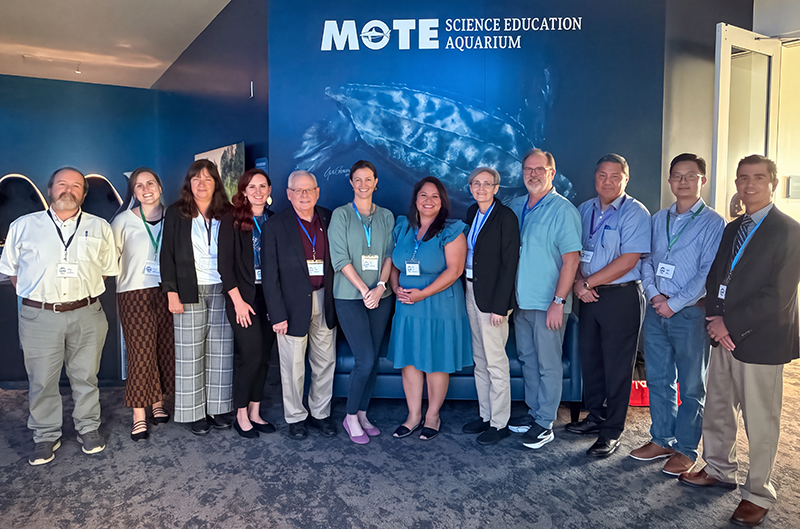
Top Image: GCOOS Board Members at the 2026 Fall Members’ Meeting in Sarasota Florida.
Bottom Image: A group picture of meeting attendees.
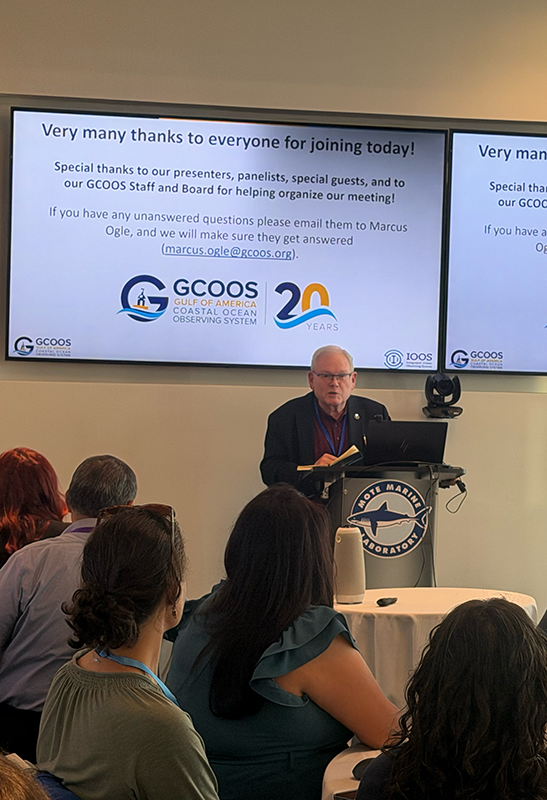
Dr. Jim Kendall wraps up the meeting as the new Chair of the GCOOS Board of Directors.